Effective Post-Trade Show Follow-up: How to Organise Data, Contacts and Team Actions
 After a trade show ends, many teams face the challenge of organising all the conversations held at the booth. Intensive interactions turn into notes, business cards and sets of data that need to be quickly translated into concrete sales and marketing activities. It is precisely this post-event stage that determines whether participation in the trade show strengthens the pipeline or remains only a well-executed operational project.
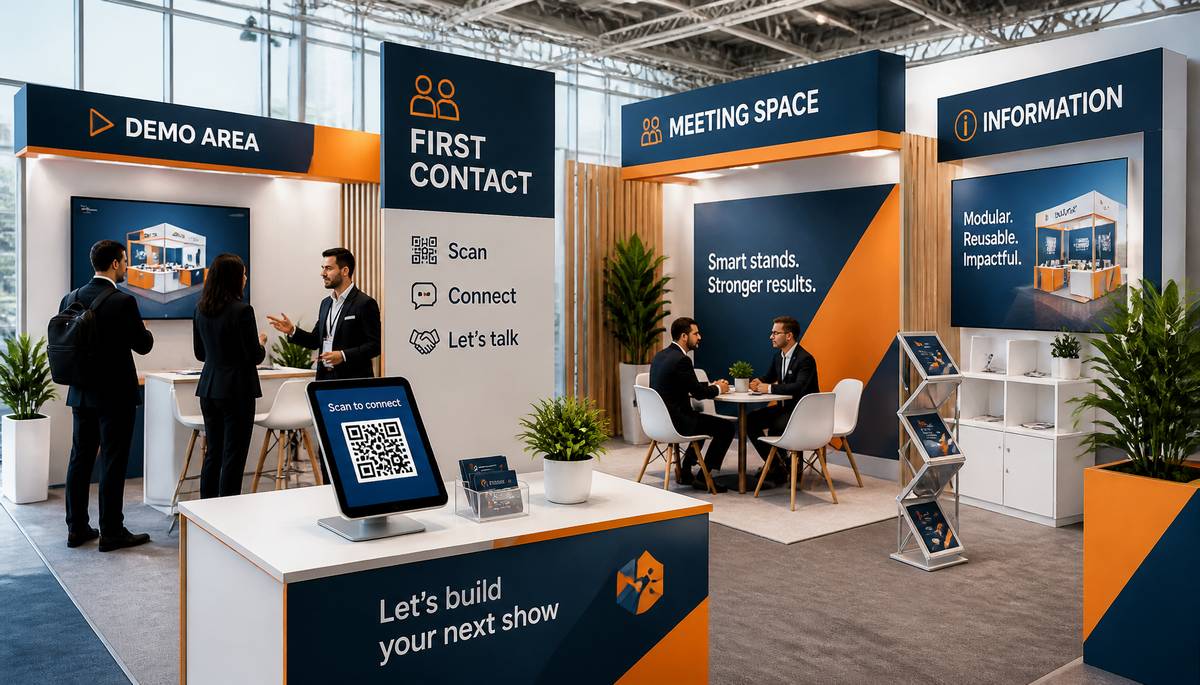
However, an effective follow-up starts much earlier than after leaving the hall. The key is to plan the booth in a way that supports contact registration, makes the team’s work easier and helps structure information. Modular solutions used in modern trade show booths provide a clear layout of zones, well-marked places for contact registration and the ability to easily adapt graphic panels to the current campaign. As a result, the process of collecting data becomes simpler and more predictable.
After a trade show ends, many teams face the challenge of organising all the conversations held at the booth. Intensive interactions turn into notes, business cards and sets of data that need to be quickly translated into concrete sales and marketing activities. It is precisely this post-event stage that determines whether participation in the trade show strengthens the pipeline or remains only a well-executed operational project.
However, an effective follow-up starts much earlier than after leaving the hall. The key is to plan the booth in a way that supports contact registration, makes the team’s work easier and helps structure information. Modular solutions used in modern trade show booths provide a clear layout of zones, well-marked places for contact registration and the ability to easily adapt graphic panels to the current campaign. As a result, the process of collecting data becomes simpler and more predictable.
Why good follow-up does not “happen by itself”
Marketing teams emphasise that the biggest difficulty after a trade show is synchronising the knowledge gained during conversations. Every short consultation, every demo and every exchange of business cards generates data that needs to be standardised. That is why the follow-up stage should be treated as an integral part of the trade show strategy, not as a separate project.
A well-designed booth supports this process through clearly defined zones: a first-contact area, a demo area, a meeting space and an information zone. A layout based on modular elements makes it possible to create these areas in a repeatable way, so teams can more easily analyse where the most valuable conversations came from and how visitor traffic flowed.
Organising data after the event
The first step in effective follow-up is consolidating the information collected at the booth. In practice, this comes down to creating a single, coherent contact database that contains both basic data and the context of the conversation.
Key elements worth noting:
- first and last name,
- position and scope of decision-making,
- company and location,
- topic of the conversation and needs expressed during the visit,
- preferred method of contact,
- priority and suggested next step.
Experience shows that even the best CRM cannot replace proper preparation of the lead registration zone. When the booth has been designed with the team’s work in mind - with a convenient place for a tablet, QR codes in the discovery zone or a separate space for briefly summarising the conversation - the data is more complete, better organised and more useful at the analysis stage.
Assessing lead quality
The next stage is segmenting the collected contacts. A person who came for specific information on how to adapt the booth to different event formats requires a different approach from a visitor who was only checking whether participating in trade shows is worth considering at all.
A natural basis for segmentation is also the zone in which the conversation took place: in the demo area, in the meeting area or at the entrance. The logic of functional zones significantly facilitates the interpretation of needs and makes it possible to assign leads to thematic groups that later determine the direction of communication.
Prioritising contacts and planning actions
For follow-up to be effective, a simple system of priorities is needed. In practice, three categories are usually used:
- high priority - people declaring a specific trade show project or the need for a quick quotation,
- medium priority - contacts interested in a conceptual discussion or an offer for the next season,
- low priority - visitors collecting general information about display possibilities.
This kind of structure allows sales and marketing teams to work efficiently, avoiding overload and chaotic actions. Each group receives communication appropriate to the stage they are at.
Main stages of effective follow-up
1. Recording notes immediately after the conversation
The best results come from briefly summarising conversations while still at the trade show. Meeting areas in modular booths make it easier to pause for a moment and write down the most important information before it is forgotten.
2. Linking notes with forms and codes
More and more often, booths include QR codes that lead to forms or additional materials. Thanks to well-planned placement of graphic panels and the ability to quickly replace them using a magnetic system, visitors can easily be directed to the right content and the data can then be linked to the team’s notes.
3. Integration with CRM
The next step is to bring everything together in one place. Priorities, tags, notes and stages are elements that should be entered first. A clear workflow ensures that salespeople do not lose track of contacts and marketing can plan educational sequences for less urgent leads.
4. Preparing communication tailored to segments
Effective follow-up is not about sending one universal email. It is worth preparing separate messages for high-priority leads, for people interested in booth concepts and for contacts who mainly visited the demo or information zones.
The role of the booth in collecting qualitative data
The booth has a major impact on the quality of information gathered during the event. Clearly defined zones increase the predictability of visitor movement, and a carefully designed space makes it easier for the team to capture key data. The possibility of reusing the same modules many times means that subsequent editions of the event can be compared in a methodical way, gradually optimising both the zones and the lead-handling processes.
Easy assembly and disassembly without the use of tools makes it possible to focus on the content aspects of the event rather than the logistics. This is especially important when the team must simultaneously prepare a workspace, a demo area and a meeting space for conversations with clients.
How to turn contacts into real projects?
The final stage of follow-up is moving from communication to a discussion about concrete concepts. Many companies treat the first exchange of messages as an invitation to talk about exhibition projects - regardless of whether it concerns a single show or an entire season. A modular approach to booth design makes it easy to adapt solutions to event formats: from intimate presentations to large-scale exhibitions at international trade shows.
Companies interested in planning their presence at upcoming events can find detailed information and examples of implementations on the website of an established exhibition stand producer, Clever Frame: https://cleverframe.com/system-properties/. It is a natural place to start a conversation about booth concepts and about planning trade show presence over multiple seasons.
|
|

