Why Commercial Plumbing Problems Often Begin When a Building Is Almost Empty
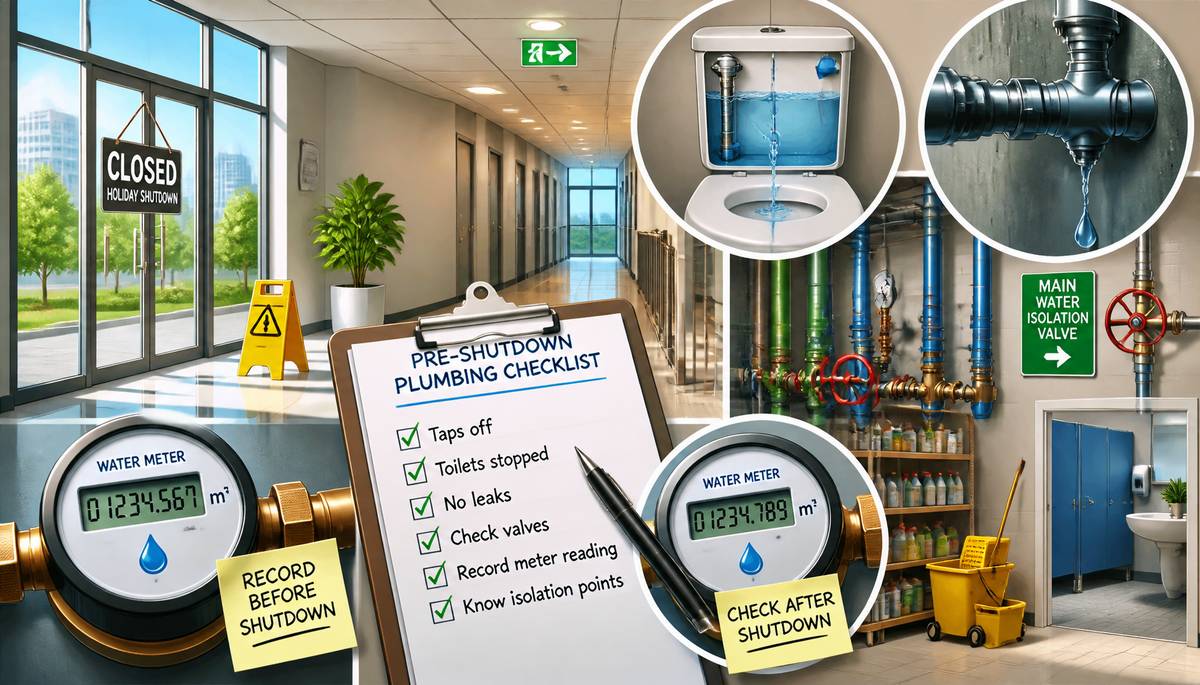 A building does not necessarily behave itself just because everyone has gone home. Once the computers are asleep, the lights are off and the last employee has finally located their car keys, the plumbing system carries on working. In fact, evenings, weekends and holiday shutdowns can expose problems that remain surprisingly well hidden during normal working hours.
Commercial buildings experience highly variable water demand. Toilets flush, taps run, kitchens operate and cleaning teams move from one area to another. All that activity creates a constantly changing plumbing environment. When demand suddenly falls, however, pressures stabilise, water stops moving through many sections of pipework and previously insignificant faults can become much easier to detect.Daytime Activity Can Hide a Remarkable Amount
Consider a toilet with a faulty inlet valve that allows water to trickle continuously into the cistern. During a busy working day, when dozens of toilets are being flushed repeatedly, that small continuous flow may attract no attention whatsoever. At midnight, it becomes one lonely toilet quietly attempting to refill itself until the end of civilisation.
Dripping taps, leaking valves and small overflows can disappear into the general pattern of daytime water consumption in much the same way. A facilities manager looking at water-meter readings during business hours may struggle to distinguish genuine wastage from ordinary demand.
One useful test is therefore remarkably simple. Once everyone has left and legitimate water use has stopped, record the water-meter reading. Check it again after a suitable period when no water should have been consumed. Unexpected movement deserves investigation. In a large commercial property, even a seemingly modest unexplained flow can represent substantial wastage when multiplied across nights, weekends and months.Pressure Changes When Demand Disappears
Water pressure can also behave differently when a building empties. During working hours, numerous outlets drawing water simultaneously can reduce the pressure experienced throughout the system. Once those outlets close, static pressure may rise.
That change can expose weaknesses in ageing fittings, flexible connections, valves and seals. A connection that survives perfectly happily while the building is busy may begin weeping when subjected to sustained higher pressure overnight. Unfortunately, plumbing components have an irritating habit of choosing Christmas Eve rather than Tuesday lunchtime to demonstrate this principle.
Pressure-reducing valves deserve particular attention in buildings where incoming mains pressure is relatively high. If one is sticking, incorrectly adjusted or approaching failure, periods of low demand may reveal symptoms that are difficult to reproduce while the property is occupied.Shutdowns Change the Normal Plumbing Routine
Extended closures introduce another issue: stagnation. Sections of pipework that normally receive regular use can sit untouched for days or weeks. Water heaters, storage systems and specialist equipment may also operate differently when demand drops sharply.
Facilities managers should therefore avoid treating a holiday closure as simply a very long weekend. The plumbing system may require its own shutdown procedure, particularly in larger premises with multiple floors, kitchens, washrooms, plant rooms or seldom-used branches.
Before closing, inspect accessible pipework and plant areas for dampness, staining, corrosion or unexplained condensation. Check toilets for continuous running, examine taps that do not close cleanly and listen for water movement when everything should be quiet. That last check requires no sophisticated equipment whatsoever. Sometimes standing still in an empty washroom for thirty seconds tells you considerably more than walking through it while twelve people are making coffee.
Give Isolation Valves Some Attention
Isolation valves are easy to forget because their finest achievement is usually doing absolutely nothing for years at a time. Unfortunately, discovering that a valve has seized is considerably less entertaining when water is already escaping from somewhere nearby.
Before an extended closure, facilities teams should know where the main incoming stop valve and important local isolation valves are located. Accessible valves can be visually checked for corrosion, staining or signs of leakage. Any valve that appears damaged or unreliable should be assessed rather than enthusiastically attacked with a large spanner five minutes before everyone leaves for the holidays.
Where appropriate, non-essential supplies may be isolated during a prolonged shutdown, although this decision should take account of equipment and systems that require a continuing water supply. Fire protection, heating equipment, process machinery and other building services may have specific requirements. Closing valves indiscriminately can exchange one problem for a considerably more expensive one.Look Where Nobody Normally Looks
Commercial plumbing faults frequently develop in places that receive little attention. Cleaner cupboards, plant rooms, storage areas, staff kitchens and rarely used toilets can contain small leaks for surprisingly long periods.
A useful pre-closure inspection should therefore include the boring corners. Look beneath sinks, around toilet bases, behind accessible appliances and near water heaters. Check ceilings and walls for staining that might indicate concealed leakage. Floor drains and gullies should also be considered, particularly where traps could dry out during a lengthy period without use.
Running toilets deserve special suspicion. A defective flush or fill valve can waste water continuously without producing the dramatic evidence associated with a burst pipe. Nobody arrives on Monday morning wearing Wellington boots, yet the water bill has quietly acquired ambitions of its own.Use the Water Meter as an Early Warning System
Meter readings taken immediately before and after a shutdown can provide valuable information. If a building has been genuinely unoccupied and water consumption should have been negligible, unexpected usage provides a reason to investigate further.
For larger properties, automated monitoring can make this process considerably more effective. Smart meters and leak-detection systems can identify unusual consumption patterns, including continuous overnight flow. Some systems can generate alerts when consumption exceeds predetermined thresholds.
Even without automated equipment, keeping a simple record of overnight or weekend readings can establish what normal background consumption looks like. Changes then become easier to spot. Plumbing problems are often much cheaper to investigate while they are merely suspicious numbers on a spreadsheet than after they become suspicious stains on the ceiling below.When the Building Goes Quiet, Listen to the Pipes
Before locking a commercial property for several days or weeks, a short plumbing inspection can prevent an unpleasant return. Confirm that taps are closed, toilets have stopped filling, accessible appliances are dry and there are no unexplained sounds of flowing water. Record the meter reading and ensure responsible staff know where critical isolation points are located.
For longer shutdowns, consider whether professional inspection is appropriate, especially where the property contains ageing pipework, complex water systems or a history of pressure and leakage problems. Arrangements for reopening are important too, since stagnant sections may need flushing and equipment may require specific recommissioning procedures.No Staff Does Not Mean No Flow
An empty building can create the impression that nothing much is happening, but plumbing systems do not clock out with the employees. Reduced demand can expose pressure problems, persistent leaks and faulty valves precisely because the usual background activity has disappeared.
That makes quiet periods surprisingly useful diagnostic opportunities. A few meter readings, a walk through seldom-visited areas and some attention to toilets, valves and visible pipework can reveal faults before an extended closure gives them several uninterrupted days to become expensive. Silence may be golden, but if it is accompanied by the faint sound of running water, it is probably worth finding out why.
|
|

