How Different Types of Business Premises Face Very Different Pest Challenges
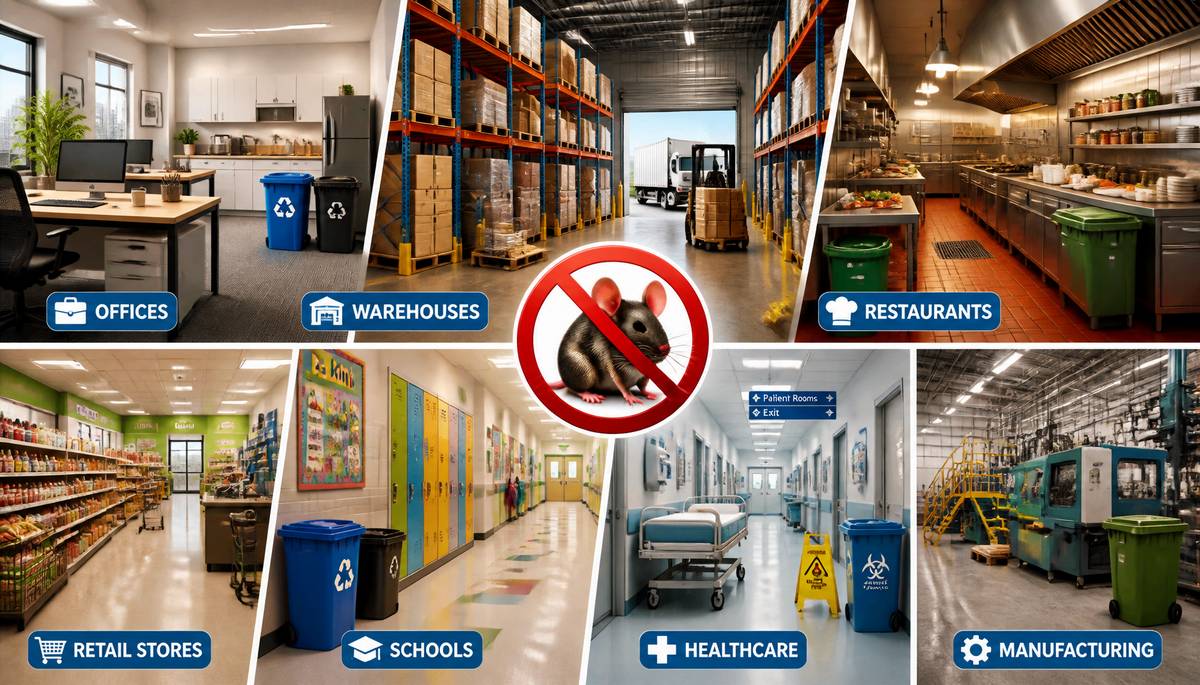 A mouse in an office is an unwelcome surprise; a mouse in a restaurant is a five-star disaster with whiskers.
Business premises may all have walls, doors, bins, and staff who swear they “definitely didn’t leave that sandwich there,” but their pest risks can be completely different. The layout, stock, footfall, waste, moisture, warmth, opening hours, and daily routines all shape which pests are most likely to appear. This is why a one-size-fits-all approach to pest prevention rarely works well. A warehouse, a school, and a healthcare facility may all need pest control, but they do not need the same plan wearing a different hat.Offices and the Hidden Snack Economy Offices can seem low-risk compared with food businesses, but pests are not especially impressed by job titles or meeting rooms. They are interested in crumbs, warmth, shelter, and quiet corners. Kitchenettes, desk drawers, bins, suspended ceilings, and storage cupboards can all become attractive spots for insects or rodents.
The main issue in offices is often inconsistency. One team keeps the kitchen spotless. Another treats the microwave like an archaeological site. Hybrid working can also mean food waste sits unnoticed for longer, especially after quiet Fridays or long weekends. Prevention usually means better cleaning routines, sealed food storage, regular bin removal, and checking gaps around service pipes, doors, and cable runs.Warehouses and the Problem of Scale Warehouses face a very different challenge: size. Large open spaces, loading bays, pallets, packaging, vehicle movement, and frequent deliveries create plenty of opportunities for pests to enter and hide. Rodents are a common concern, especially where goods are stored for long periods or where external doors are opened throughout the day.
Cardboard, shrink wrap, timber pallets, and cluttered racking can provide shelter. If stock rotation is poor, pests may settle in before anyone notices. Warehouses need strong inspection routines, tidy storage zones, proofed loading areas, clear waste management, and careful checks on incoming goods. A warehouse pest problem can spread quietly because there is simply so much space for it to practice being mysterious.Restaurants and the High-Pressure Food Factor Restaurants, cafés, and commercial kitchens are naturally high-risk because they combine food, heat, moisture, waste, and constant deliveries. That combination is basically a luxury brochure for pests, minus the tiny spa robes.
Here, the stakes are serious. Pest activity can damage reputation, threaten hygiene standards, contaminate food areas, and lead to costly closures. Common risks include rodents, flies, cockroaches, stored-product insects, and ants. Prevention needs to be daily, not occasional. Food should be sealed, drains maintained, bins cleaned, deliveries inspected, and gaps around doors, vents, and pipework properly sealed.Retail Stores and Customer-Facing Risks Retail premises vary widely. A clothing shop may struggle with fabric pests or rodents entering through stockrooms, while a grocery store has risks closer to those found in food environments. Pet shops, garden centres, bakeries, and convenience stores each bring their own pest attractions.
The customer-facing nature of retail makes even a minor sighting feel major. One insect near a display can become a dramatic public event, especially if someone has a phone and a flair for captions. Retail prevention depends on clean stockrooms, careful stock checks, good waste handling, and fast action when signs appear.
Schools and Educational Buildings Schools experience constant movement. Hundreds or even thousands of people pass through every day, carrying bags, lunches, sports equipment, and everything else that makes a school feel alive. Unfortunately, that same activity creates countless opportunities for pests to find food and shelter.
Dining halls, kitchens, classrooms, storage cupboards, and outdoor bin areas all deserve attention. Birds may gather around playgrounds where food is regularly dropped, while rodents can be drawn to overflowing waste bins or neglected maintenance areas. During school holidays, buildings often become quieter, allowing small pest problems to develop unnoticed before staff return. Regular inspections before and after holiday periods, prompt repairs to damaged buildings, and consistent cleaning schedules all help reduce the risk.Healthcare Facilities Demand Constant Vigilance Hospitals, clinics, care homes, and medical centres have exceptionally high hygiene expectations. Pest prevention here is about far more than protecting buildings. It helps safeguard patients, staff, visitors, medicines, equipment, and public confidence.
Food preparation areas still require careful monitoring, but healthcare facilities must also pay close attention to laundry rooms, waste storage, plant rooms, service ducts, and external landscaping. Even a relatively minor pest sighting can trigger significant concern because of the environment in which it occurs. Prevention relies on rigorous housekeeping, rapid reporting, carefully managed waste disposal, regular inspections, and building maintenance that leaves as few opportunities as possible for pests to enter.Manufacturing Sites Face Unique Production Risks Manufacturing premises vary enormously depending on what they produce. A food processing facility faces very different risks from a factory producing electronic components or furniture. Even so, every manufacturing site benefits from understanding how its operations influence pest activity.
Food manufacturers naturally focus on stored-product insects, rodents, and flies, while factories handling raw materials, timber, textiles, or paper products may encounter different insect species. Machinery also creates warm, sheltered areas that some pests find surprisingly comfortable. Production downtime can occasionally provide pests with uninterrupted access to areas that are normally busy.
Effective prevention combines routine inspections with excellent housekeeping, well-organised storage, careful management of waste materials, and close monitoring of incoming deliveries. Staff training also plays an important role, ensuring unusual signs are reported quickly instead of becoming tomorrow's much larger problem.One Business Does Not Equal One Solution Perhaps the biggest mistake businesses make is assuming that successful pest prevention in one type of premises can simply be copied elsewhere. Every industry has different operating hours, cleaning routines, building layouts, customer traffic, storage methods, and regulatory requirements. Those differences shape which pests are likely to appear and how they should be managed.
A tailored prevention strategy begins with understanding how the premises actually functions on a daily basis. Identifying vulnerable areas, maintaining the building, educating staff, monitoring regularly, and responding quickly to early warning signs will always produce better results than waiting for obvious evidence of an infestation.Bugging Off Before Trouble Starts Successful pest prevention is less about reacting dramatically and more about quietly removing opportunities before they become expensive problems. Businesses that understand the specific risks associated with their own premises are far better equipped to protect their staff, customers, stock, reputation, and day-to-day operations.
Pests rarely follow a business plan, but they do follow food, water, shelter, and easy access. Remove those ingredients wherever possible, tailor prevention to the type of premises you operate, and you greatly reduce the chances of unwanted visitors deciding your workplace is the perfect place to settle in for the long haul.
|
|