The Shifting Landscape of B2B Search Visibility: Why AI Readiness is the New SEO Standard
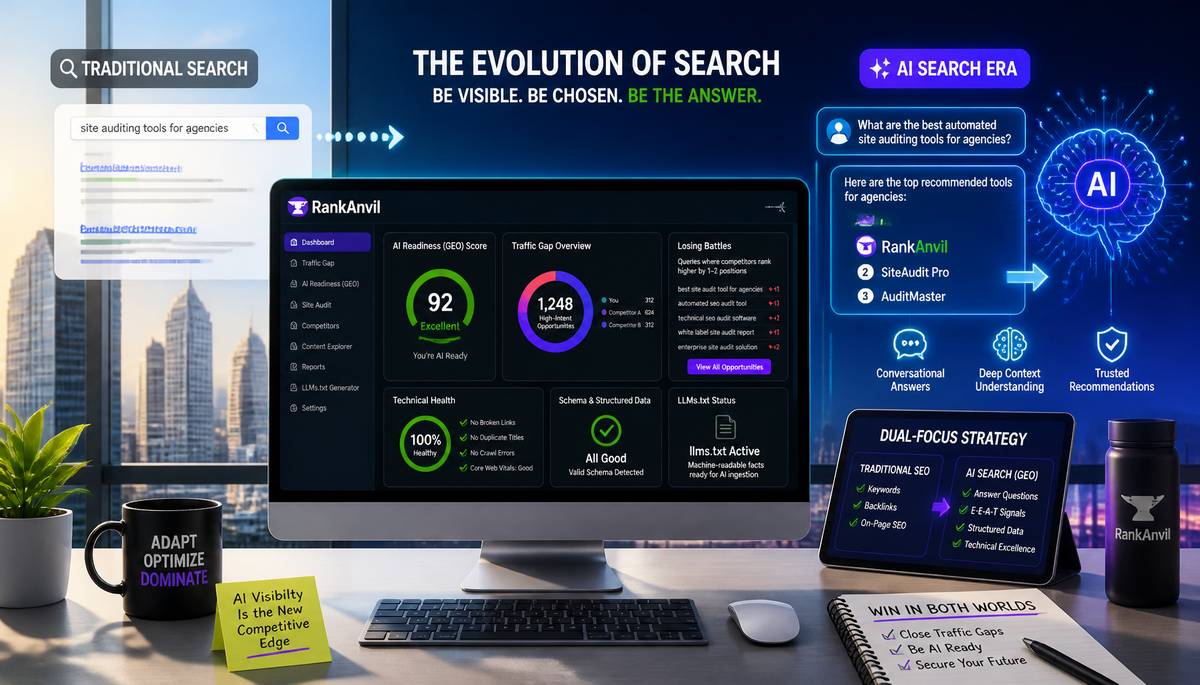 For over two decades, B2B digital marketing has been governed by a relatively straightforward set of rules: target the right keywords, build authoritative backlinks, and optimize on-page content to please traditional search engine algorithms. However, the rapid integration of Artificial Intelligence into search engines led by platforms like ChatGPT, Perplexity, and Google's AI Overviews is fundamentally rewriting the playbook for business visibility.
Today, ranking on the first page of traditional search results is no longer enough to guarantee digital dominance. B2B companies and the digital agencies that represent them must now focus on a new metric: Generative Engine Optimization (GEO), or "AI Readiness."
The Rise of Generative Engine Optimization (GEO)
Unlike traditional search engines that provide a list of blue links, AI search agents are designed to synthesize information and provide direct, conversational answers. When a potential B2B client asks an AI, "What are the best automated site auditing tools for agencies?", the AI doesn't just list websites; it recommends platforms based on deep contextual understanding, structured data, and E-E-A-T (Experience, Expertise, Authoritativeness, and Trustworthiness) signals.
If a business's website lacks the specific technical architecture required by Large Language Models (LLMs) such as clean schema markup, direct Q&A formatting, and machine-readable fact files, the AI will simply ignore the site and recommend a competitor instead. This has created an invisible "AI Traffic Gap" where businesses are losing market share without even realizing it.
The Invisible Threat of the Traffic Gap
In the traditional SEO landscape, competitor analysis meant looking at keyword overlap. Today, the concept of a "Traffic Gap" is much more aggressive. Competitors are actively capturing high-intent commercial traffic by answering the specific, long-tail questions that potential clients are asking AI engines.
To combat this, agencies must utilize advanced discovery tools to map out exactly where a client's competitors are capturing traffic, and more importantly, identify the "Losing Battles" search queries where a competitor is outranking them by just one or two positions. Closing these gaps requires a surgical approach to content creation, ensuring that the business directly answers the exact queries being fed into both traditional and AI search bars.
The Necessity of Technical Health
AI engines are incredibly sophisticated, but they are also deeply reliant on clean website architecture. A site plagued with broken links (404s), duplicate title tags, or inaccessible resources will not be trusted by an AI crawler. Maintaining a flawless technical foundation is no longer just a best practice; it is a strict prerequisite for AI visibility. Modern digital agencies must run deep, headless-browser crawls to ensure their clients' sites are technically flawless and fully accessible to AI bots.
Equipping for the Next Generation of Search
Navigating this dual landscape of traditional SEO and AI search requires a new breed of technology. This is where platforms like RankAnvil are changing the industry standard.
Designed specifically as a comprehensive SEO and AI advertising workshop, RankAnvil allows digital agencies to bridge the gap between old-school ranking tactics and next-generation AI visibility. By providing advanced features like Traffic Gap analysis, automated technical site auditing, and proprietary AI Readiness (GEO) scoring, platforms like RankAnvil empower B2B businesses to see exactly how they are viewed by AI engines. Furthermore, the platform's ability to generate machine-readable llms.txt files ensures that AI agents can ingest and understand a company's core facts with 100% accuracy.
Conclusion
The transition from traditional search to AI-driven discovery is happening faster than most businesses realize. Companies that continue to rely solely on legacy SEO tactics will soon find themselves invisible to the next generation of buyers. By embracing GEO, closing competitor traffic gaps, and utilizing advanced diagnostic platforms, B2B enterprises can secure their share of voice in both the search engines of today and the AI assistants of tomorrow.
|
|

