Why a Plumbing Company's Worst Customer Complaint Could Become Its Most Valuable Marketing Opportunity
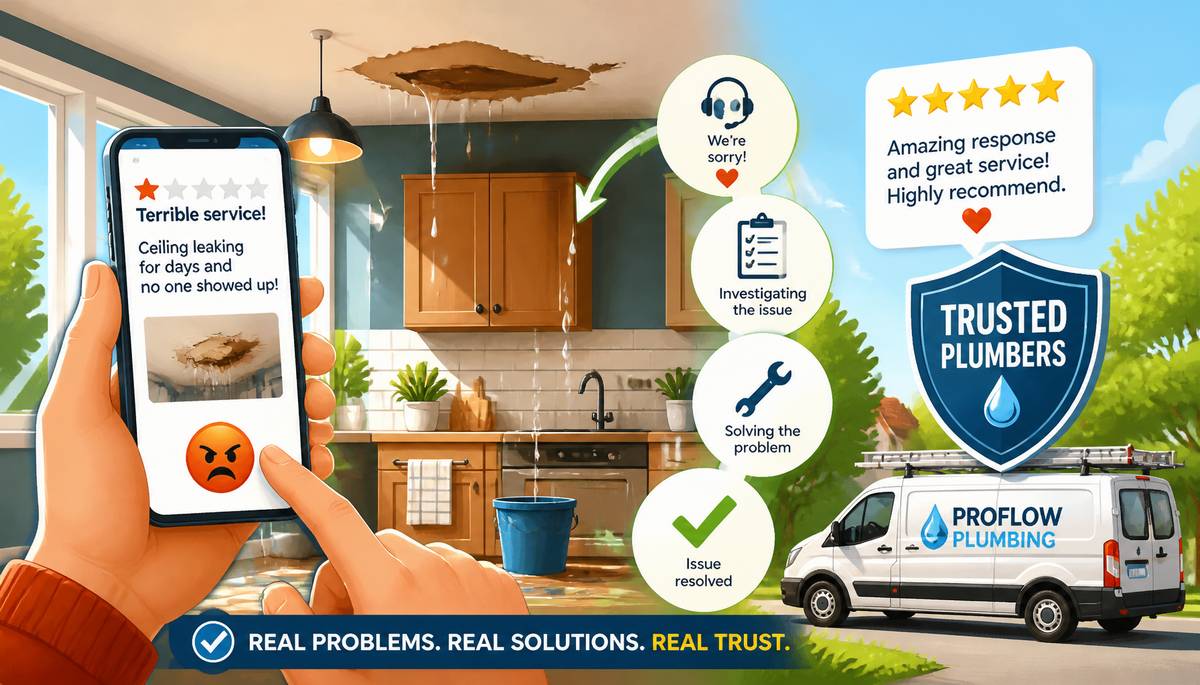 A furious customer with a dripping ceiling and a smartphone can become an unofficial marketing director for a plumbing company, although probably not the sort anyone would willingly employ. One angry review, accompanied by photographs of a suspiciously damp kitchen, can attract more attention than months of carefully planned advertising. Yet the complaint itself may not determine the damage to a company's reputation. What happens afterwards often matters considerably more.
By 2026, prospective customers have become accustomed to investigating businesses before making contact. They examine Google reviews, browse social media comments and look for evidence that a company can be trusted. Surprisingly, an occasional negative review can actually strengthen that trust, provided the business responds intelligently.
Why Perfect Reviews Can Look Suspicious
A plumbing company displaying hundreds of immaculate five-star reviews might appear exceptionally reliable. Alternatively, particularly cynical customers may wonder whether its entire customer base consists of unusually enthusiastic relatives.
Real businesses occasionally make mistakes. Appointments get delayed, replacement parts arrive late, misunderstandings occur and repairs sometimes fail to resolve the original problem. Customers generally understand this. What concerns them is whether the company accepts responsibility when things go wrong.
A thoughtful response to a legitimate complaint demonstrates something that conventional advertising rarely achieves. It provides visible evidence of how a business behaves under pressure.
A prospective customer reading a negative review about a delayed boiler repair may be reassured to discover that the company apologised, explained the circumstances, arranged a follow-up visit and resolved the issue without additional charges. The original complaint becomes evidence of accountability rather than incompetence.
Responding Without Reaching for the Flamethrower
Receiving a particularly unfair review can be infuriating. The temptation to publish a detailed rebuttal, complete with timestamps, photographs and observations about the customer's personality, should nevertheless be resisted.
Public review responses are not private arguments. They are communications addressed indirectly to every future customer who encounters them.
A useful response should acknowledge the customer's frustration, identify the concern and explain what action the business intends to take. Where further investigation is necessary, the company can invite direct contact without appearing to dismiss the complaint.
For example, rather than writing that a customer misunderstood the quotation, a plumbing business might explain that its pricing should always be clearly communicated and offer to review the disputed invoice.
This approach does not require accepting accusations that are demonstrably false. It simply recognises that professionalism is more persuasive than winning an online shouting match.
Recognising When the Customer Has a Point
Some complaints expose genuine operational weaknesses. Repeated criticism concerning late arrivals, unclear invoices or unanswered telephone calls should prompt investigation rather than another carefully polished apology.
Businesses should record complaints, identify recurring problems and introduce measurable improvements. A revised appointment confirmation system, clearer written estimates or better communication between office staff and engineers may prevent similar incidents.
An apology becomes considerably more convincing when accompanied by evidence that something has actually changed.
Turning Social Media Complaints Into Constructive Conversations
Social media introduces another complication because complaints can spread well beyond the original customer. A frustrated homeowner posting photographs of an unfinished bathroom repair may attract comments from neighbours, friends and complete strangers who have suddenly developed strong opinions about pipe fittings.
Responding quickly matters, but speed should never replace accuracy. Plumbing companies should acknowledge public complaints promptly, establish the facts and avoid discussing confidential customer information in open conversations.
Where appropriate, detailed discussions can move to private messaging or telephone communication. However, the public conversation should not simply disappear. Once a dispute has been resolved, a brief follow-up explaining that the matter received attention can reassure anyone who witnessed the original complaint.
Crucially, customers should never be pressured into deleting legitimate negative feedback. An honest account of a successfully resolved problem can be more valuable than an artificially spotless reputation.
Why Following Up Makes Such a Difference
Resolving a complaint should not necessarily mark the end of communication. A short follow-up message several days later can establish whether the repair remains satisfactory and whether the customer has any outstanding concerns.
This relatively simple gesture distinguishes businesses genuinely interested in customer satisfaction from those primarily interested in making complaints disappear.
For plumbing companies, follow-up communication can also reveal technical problems that might otherwise remain unnoticed. A repaired leak that subsequently returns, for example, deserves immediate attention before minor inconvenience develops into expensive property damage.
Businesses should document agreed remedies, honour promised deadlines and maintain clear records of conversations. Where compensation or refunds are appropriate, these should be handled consistently rather than negotiated according to which customer complains most loudly.
Measuring the Marketing Value of Complaint Resolution
Customer complaints can provide useful information about operational performance and reputation. Rather than counting negative reviews alone, plumbing companies should examine how effectively problems are resolved.
Useful measurements include average response times, the proportion of complaints successfully settled, recurring causes of dissatisfaction and whether affected customers subsequently return.
These findings can inform staff training, customer service procedures and marketing messages. A business that consistently resolves problems promptly has genuine evidence supporting its claims of reliability.
However, individual disputes should never become promotional case studies without appropriate customer permission. Nobody wants to discover that their unfortunate encounter with a leaking toilet has become the centrepiece of somebody else's marketing campaign.
Putting Reputation Repairs Under Pressure
The strongest plumbing businesses are not necessarily those that receive the fewest complaints. They are often those with clear procedures for handling dissatisfaction fairly, consistently and without unnecessary confrontation.
Advertising can promise excellent workmanship, punctual engineers and attentive customer service. A well-handled complaint demonstrates whether those promises survive contact with reality.
Customers choosing a plumber are ultimately making a decision about risk. They want competent repairs, reasonable charges and reassurance that unexpected problems will not leave them abandoned.
A negative review handled with patience, transparency and practical action can therefore become an unexpectedly persuasive recommendation. After all, fixing a damaged reputation requires much the same qualities as fixing a troublesome pipe: identify the problem, address the underlying cause and make absolutely certain nothing is still leaking afterwards.
|
|

